Are Store-Bought Drain Cleaners Safe for Eugene Homes? What Plumbers Say in 2026
Store-bought drain cleaners are a common go-to for homeowners in Eugene, OR, but licensed plumbers consistently caution that these products can create more problems than they solve. This post covers what chemical drain cleaners actually do to pipes, why Eugene's older housing stock makes that risk worse, and what safer drain cleaning alternatives in Eugene, OR, actually address the root cause.
What Store-Bought Drain Cleaners Actually Do to Your Pipes
Chemical drain cleaners work fast, but that speed comes at a cost. Most products rely on highly caustic compounds such as sodium hydroxide or sulfuric acid. These chemicals generate heat as they react with organic matter, and that heat can soften or warp plastic pipes. Over time, repeated use may thin the walls of older metal pipes as well.
The damage is often slow and invisible. You may use a liquid drain cleaner several times before a pipe develops a pinhole leak or a joint begins to fail. By then, the fix can be far more involved than a simple drain cleaning in Eugene, OR.
Why Eugene Homes Face a Higher Risk
Eugene, OR, has a large share of homes built between the 1940s and 1980s. Many of these properties still have original plumbing that was installed with materials no longer used in new construction. Cast iron drain lines, galvanized steel pipes, and older PVC formulations are all more vulnerable to chemical damage than modern materials.
Homes in neighborhoods like Whiteaker, Fairmount, and the South Hills area frequently have clay tile sewer laterals connecting the house to the city main. Clay tile joints can be brittle, and caustic chemicals that make their way into the lateral can accelerate cracking or erosion at those joints. Tree root intrusion is also very common in these older clay lines throughout Eugene and surrounding Lane County communities like Springfield and Cottage Grove. Chemical drain cleaners typically cannot remove root intrusion at all, even while they are quietly degrading the surrounding pipe.
Eugene's wet winters also mean that ground movement is a recurring factor. Pipes that have already been weakened by repeated chemical exposure may be less able to handle minor soil shifts that occur during the heavy rainfall season between October and April. Homeowners who rely on store-bought products instead of professional drain cleaning in Eugene, OR, often discover this the hard way when a weakened pipe fails during the rainy season.
What Do Plumbers Recommend Instead?
Plumbers consistently point to three safer alternatives that do not carry the pipe-damage risk of chemical products.
Enzyme drain treatments use biological agents to break down grease, soap scum, and organic buildup. They work slowly, making them more appropriate for maintenance than for an acute clog. They do not generate heat, do not corrode pipe walls, and are considered far gentler on older plumbing systems. Many Eugene homeowners use them monthly as a preventative measure.
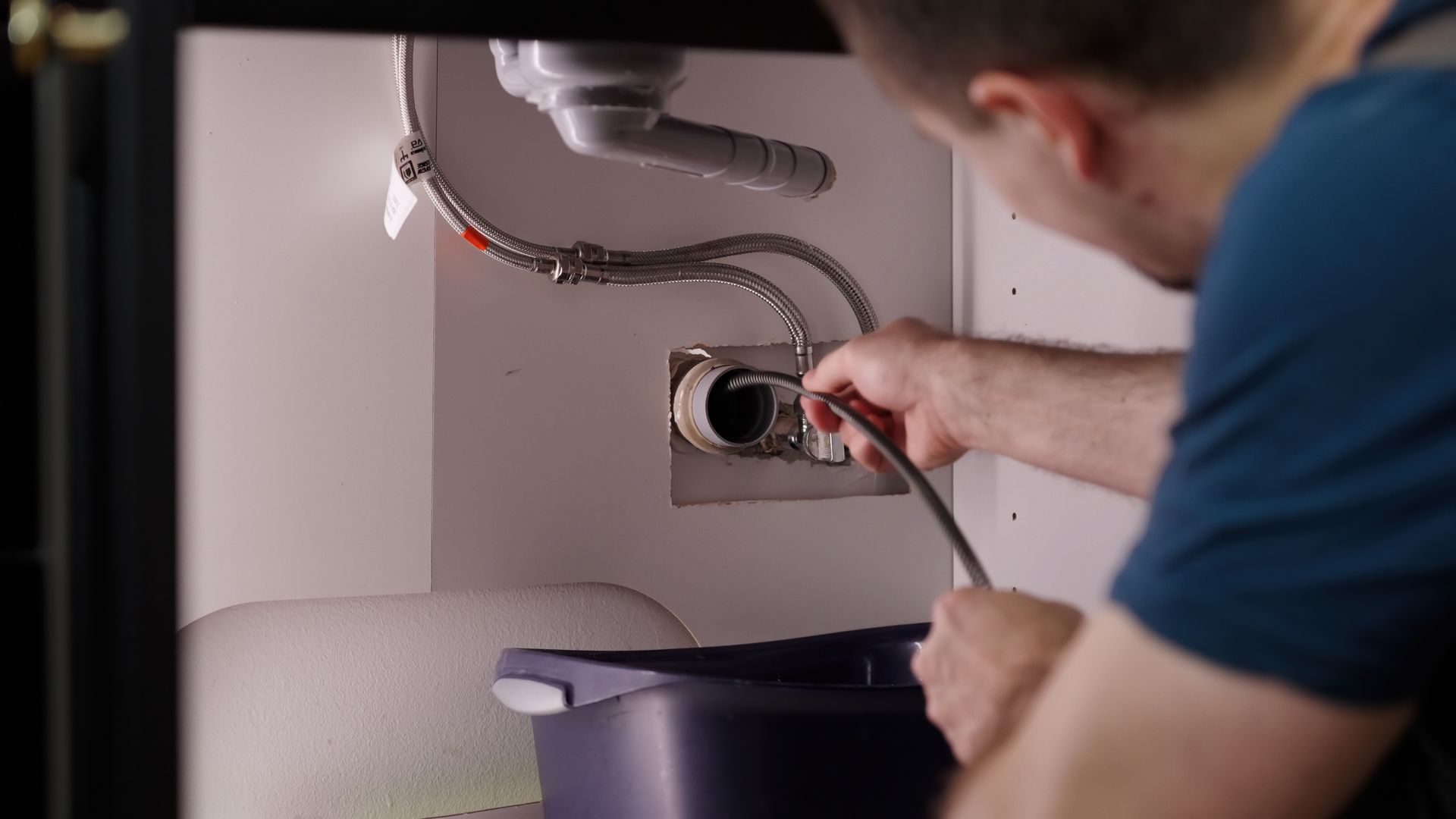
Professional drain snaking uses a mechanical cable to physically break up or retrieve the blockage. A licensed plumber can match the snake size and type to the specific drain. This approach removes the clog without introducing any chemicals into the pipe. For most household clogs, snaking is the fastest, safest, and most effective solution.
Hydro-jetting is a step up from snaking. A pressurized water stream scours the pipe walls clean, removing grease buildup, mineral deposits, and debris that a snake may push through but leave behind. It is especially effective on kitchen drain lines and commercial plumbing.
Are Enzyme Drain Cleaners Safe for All Pipe Types?
Enzyme treatments are generally considered safe for all residential pipe materials, including cast iron, PVC, ABS, and copper. Because they rely on biological action rather than heat or chemical reaction, they do not degrade pipe walls or compromise fittings. They are a reasonable maintenance habit between rounds of professional drain cleaning in Eugene, OR, and they are also safer for Eugene's municipal sewer system, as they do not introduce harsh chemicals into the waste stream that flows through Lane County's treatment facilities.
When Should You Call a Plumber for a Clogged Drain?
You should call a plumber if a drain is completely blocked and water is not moving at all, if multiple drains in the home are slow at the same time, if you notice a sewage odor coming from drains, or if a drain backs up repeatedly within a short period. These are signs the issue is deeper in the line than a surface-level clog, and chemical products will not resolve them. Professional drain cleaning in Eugene, OR, can identify and address the actual source of the problem rather than masking it temporarily. Scheduling service at the first sign of recurring trouble is far less costly than waiting until pipe damage requires a full repair.
Get the Right Fix the First Time
When a clog keeps coming back or a bottle of drain cleaner is not working, it is a signal that the problem needs professional attention. Repeated use of store-bought products can compound the issue and lead to pipe damage that is far more costly to repair. Investing in proper drain cleaning in Eugene, OR, from a licensed plumber is the more reliable path forward.
Baxter Plumbing & Rooter, Inc. has served Eugene and the surrounding Lane County area for over 40 years with licensed, bonded, and insured drain cleaning services. The team uses professional-grade tools including a trailer-mounted hydro-jetter and a state-of-the-art sewer camera to find the real source of any blockage. Whether the clog is in a kitchen sink, a bathroom drain, or a main sewer lateral, they can handle it safely and effectively.
To schedule service or ask about your options, visit the sewer and drain cleaning service page or contact the team directly. You can also call (541) 334-6696 to speak with someone today.